How to Increase Instagram DM Sales: A Practical Guide
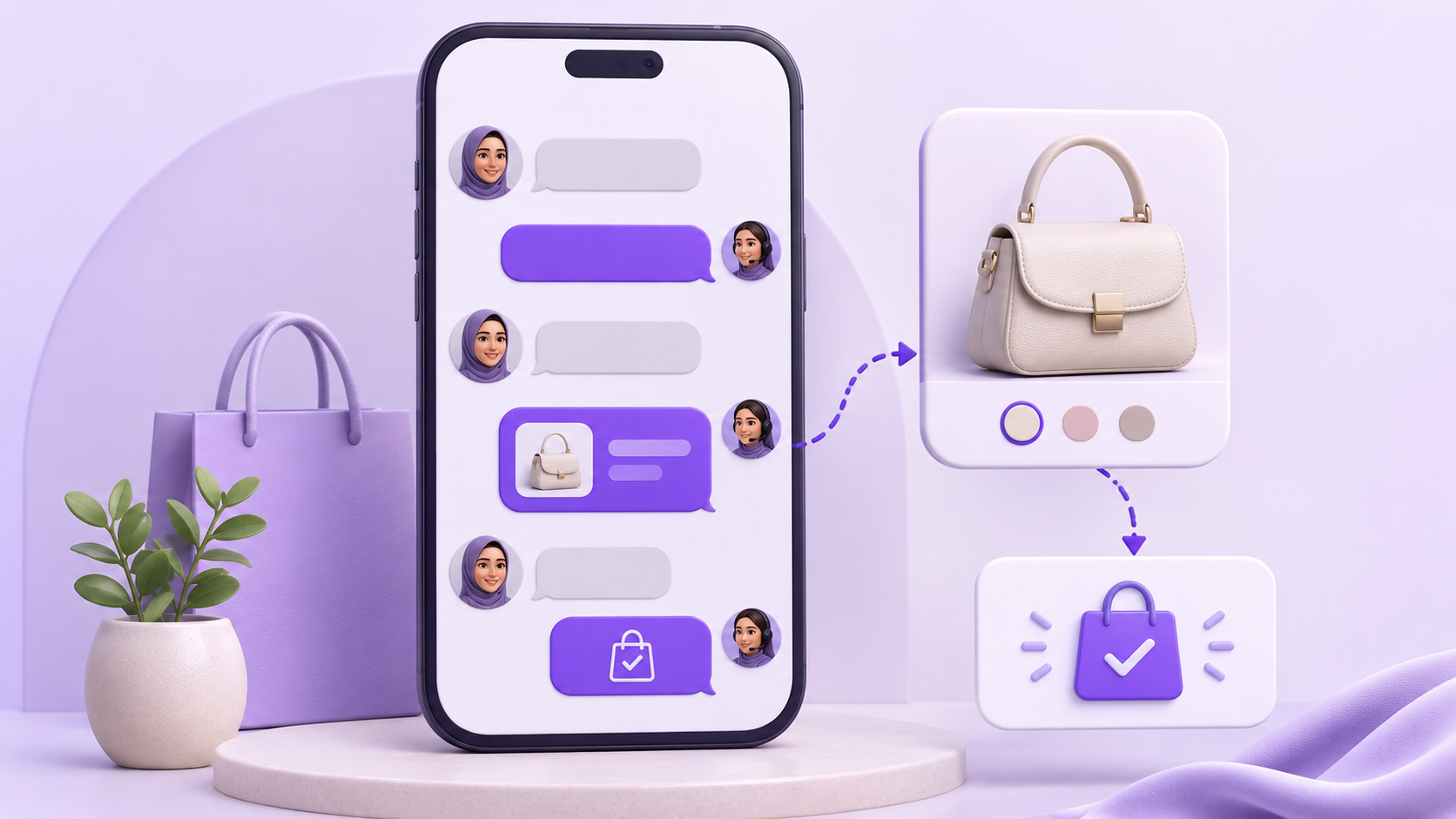
The number of DMs does not always equal the number of orders. Customers may ask about price, size, or availability and receive an answer without buying. The problem is not always pricing: they may lack information, remain unsure, or not know the next step.
To increase Instagram DM sales, improve the quality and sequence of conversations rather than focusing only on message volume: answer the request directly, understand the need, provide essential information simply, and make the next buying step clear. This guide explores that journey through shop examples, measurement criteria, and a seven-day plan.
Quick answer: where should you start?
If you only have time for a few changes today, choose these five: categorize common questions, prepare accurate price and stock replies, ask one short needs question when necessary, suggest one clear next action, and record conversation outcomes. Then automate repetitive parts without losing human interaction.
Why do more DMs not necessarily mean more sales?
DMs are where customers make decisions, but not every message signals immediate purchase readiness. Some people are checking prices, others are comparing models, and some know exactly what they want. Sending everyone the same reply may leave their actual need unanswered.
Before changing your messages, review recent conversations and identify where people usually stop: after hearing the price, receiving details, or starting an order? Use the following table to begin.
| Conversation signal | What should you investigate? | Initial action |
|---|---|---|
| Silence after the price is stated | Did the price include essential information, options, and buying conditions? | Make the price reply clearer, not longer |
| The customer repeats the same question | Is the answer buried in long messages? | Organize and shorten the information |
| The customer says “OK” and the conversation ends | Was the next action clear? | Offer a clear invitation to continue |
| Purchase-related messages go unanswered | Are messages prioritized by topic? | Prepare common replies and define a handoff path |
These signs do not prove why a sale failed. They simply identify points to investigate and improve.
A five-step path from conversation to order
1. Understand the customer’s request accurately
Continue with the topic the customer raised. If they ask “Is this model in stock?”, answer availability first. Asking numerous questions before giving basic information can slow the buying process. Ask a short, specific question only when a suitable choice needs more information, such as “Is it for everyday use or an occasion?”.
2. Give a clear, relevant answer
For a price question, make the amount, key features, and important conditions such as availability or known shipping costs clear. Hiding the price or repeatedly sending customers to other messages does not necessarily keep the conversation going. Provide what they need for the next decision, rather than the entire catalogue at once.
3. Make choosing easier
When someone is unsure between products, compare two or three suitable choices instead of introducing ten. Clearly explain differences in use, size, colour, or features. For example: “This one is lighter for everyday use; the second has more space”. A relevant recommendation makes deciding easier than a long product list.
4. Connect the conversation to one clear action
A good reply does not always need to end with “Let us know if you have any other questions”. Where appropriate, try “Would you choose black or cream?”, “Shall I send the size guide?”, or “If you’ve decided, would you like the ordering steps?”. One clear option is better than several simultaneous requests.
5. Receive the order or request without ambiguity
When customers are ready to buy, make the next step clear: selecting a model, providing essential order details, seeing payment methods, or opening a purchase page. If you use a separate ordering tool, hand the process over at that point. Otherwise, the account manager should explain exactly what details are needed and what happens after submission.
Six practical reply improvements to try this week
Separate purchase requests from general messages
Collaboration messages, Story reactions, general questions, and purchase requests do not have equal priority. Identify messages about stock, size, payment, or orders sooner so serious requests do not get lost.
Prepare reusable replies that can still be adapted
Account managers do not need to type shipping conditions or size guides from scratch every time. Base messages save time but must match the actual product before sending. Old prices, incorrect stock, or invalid shipping promises can damage trust more than a short delay.
Find the decision barrier instead of pushing for a sale
Someone saying “I need to think” may be unsure about quality, use, size, or the final cost. A polite question such as “What would you like me to explain further?” is more helpful than repeated discounts or sales messages.
Present buying information in short, organized messages
If your reply covers specifications, dimensions, shipping time, returns, and ordering, divide it into relevant sections. Each message should have a clear purpose so people can find information and decide.
Hand sensitive situations to a person
Automation suits repetitive questions, but complaints, unusual requests, payment uncertainty, and specialist advice usually require human judgement. Define in advance which messages should be passed to an account manager.
Record a clear outcome when the conversation ends
Do not just count DMs. Categorize how conversations finish: order placed, more information needed, no suitable product found, or no next action taken. These categories help identify the main problem.
A realistic example: replying to “How much is this coat?”
Consider a clothing shop where a customer moves from a product post into DMs. Both replies below are educational examples, not extracts from real sales data.
Before the change
Customer: Hi, how much is this coat?
Seller: Hi, 1.2 million.
The answer is not factually wrong, but if the customer is unsure about colour, size, or how to buy, it offers no way to resolve that uncertainty.
After the changes
Customer: Hi, how much is this coat?
Seller: Hi, this model is 1,200,000 toman. It’s currently available in black and cream. I can send the size guide too. Which colour are you considering?
In the second reply, the customer still gets the price quickly, learns the available colours, and has a simple choice to continue. This may reduce conversation friction, but actual sales improvements can only be established by reviewing the shop’s results.
A customer ready to buy needs a different reply: “If you’ve chosen the model and size, I can send the ordering details”. For an undecided customer, first resolve product uncertainty. The shared principle is matching the conversation to the audience’s intent.
Which parts of DM sales should you automate?
Not every stage is equally suited to automation. Automatic replies should reduce repetitive work for the account manager without trapping customers in a conversation with no exit. The following categories help set priorities.
| Message or activity type | Suggested approach |
|---|---|
| Fixed product prices or specifications | Prepared reply, checked for up-to-date information |
| Repeated shipping and buying questions | Structured replies or automation within available features |
| Choosing between product categories | Multi-step conversation with clear options, where the tool supports it |
| Complaints, payment errors, or special requests | Handoff to an account manager or human support |
| Order registration and management | Dedicated ordering process or account-manager assistance |
To answer common questions and organize initial customer communication, explore “Befroosh Smart Direct for Instagram”. If the customer is ready to buy, “Instagram Automatic Order Registration” is a separate feature that should be evaluated independently.
Note: automatic messages sent through Instagram-connected tools are subject to Meta’s messaging policies. Do not assume unlimited promotional messaging or automatic follow-up without time limits. Check each service’s available features against its active version too.
How can you tell whether better conversations actually improve sales?
Message volume alone is not a good sales performance measure. Over a defined period, consistently record simple indicators: average first-response time, purchase-related conversations, and orders attributable to those conversations.
Conversation-to-order conversion rate
DM-to-order conversion rate = (Orders from DMs ÷ Purchase-qualified conversations) × 100
For example, if one week includes 100 purchase-qualified conversations and 12 resulting orders, the conversion rate is 12%. These figures are hypothetical, not a market average or an expected result from a particular tool.
Define a “qualified conversation” at the start so comparisons remain valid. For example, count only conversations about a product, price, stock, or ordering. Exclude friendly messages and collaboration requests from the denominator.
A simple outcome-tracking table
| Date | Request topic | Conversation outcome | Order? |
|---|---|---|---|
| Day one | Price and stock | Size guide sent | No |
| Day one | Product selection | Final model selected and purchase recorded | Yes |
| Day two | Shipping time | Customer has not decided yet | No |
Review the data weekly: are there fewer conversations without an outcome? Are customers repeating fewer questions? Has conversion changed under a consistent definition and a sufficient sample? One week is suitable for an initial rollout; reliable conclusions about impact may require more time and a larger sample.
A seven-day plan to improve Instagram DM sales
Instead of changing everything at once, apply this plan to one popular product or category. The first seven days aim to establish a measurement baseline and identify practical improvements.
| Day | Action |
|---|---|
| 1 | Sample 30–50 purchase-related conversations and list common questions. |
| 2 | Identify conversations ending without a next action and record possible reasons. |
| 3 | Rewrite price, stock, size, and shipping replies to be short, accurate, and up to date. |
| 4 | Give each common reply just one clear next action. |
| 5 | Separate messages suitable for automatic replies from those needing an account manager. |
| 6 | Test the new replies in one product category and correct errors. |
| 7 | Review replies, unsuccessful paths, and recorded orders. Choose one improvement for next week. |
Five common mistakes that make buying harder
- Answering a price question without clarifying essential details such as model, stock, or buying conditions.
- Sending everyone the same long text without considering what they need.
- Pressuring someone to buy or repeatedly messaging an undecided customer.
- Putting several calls to action in one message so the customer does not know where to continue.
- Measuring DM volume without recording conversation outcomes and actual orders.
Frequently asked questions about increasing Instagram DM sales
Why do I get many DMs but few sales?
Not every message comes from someone ready to order. Delayed replies, incomplete information, or an unclear next step can also interrupt the conversation. Categorize recent conversations to identify shared patterns.
For DM sales, is speed or accuracy more important?
Both matter, but speed without relevance and accuracy is not enough. Send the initial reply without unnecessary delay and address the actual question. If checking stock takes time, clearly state when you expect to follow up.
Does everyone asking for a price intend to buy?
No. Some people are comparing prices or gathering information. Answer clearly and, when appropriate, offer more product details, without assuming purchase intent from a price question alone.
Can automatic replies replace a sales account manager?
Automatic replies can help with repeated information and initial request categorization, but human assistance should remain available for sensitive situations, specialist advice, and resolving problems.
When can I start assessing the effect of message improvements?
Record indicators from day one, but identifying a real conversion change requires enough conversations and comparable periods. Account for seasonality, product type, discounts, and advertising campaigns in your analysis.
Conclusion: turn scattered DMs into a clear buying path
Increasing Instagram DM sales involves more than replying faster. Understand what customers need, provide the right information at the right time, simplify choices, and keep the next step clear. Then record outcomes to see which changes actually helped.
If many of your account’s messages repeat questions about prices, stock, and purchasing terms, exploring Befroosh Smart Direct can be a useful starting point for organizing those replies. The aim is to give customers a clearer experience and free up more time for people to handle important requests.
Ready to manage your DMs more effectively?
Sign in to Befroosh to explore its reply tools and conversation flows, or contact support for guidance.